
Most people picture solar farms as sterile rows of panels baking the ground underneath. Gravel. Mowed grass. A dead zone for wildlife. That assumption has shaped how communities debate new projects across the Midwest.
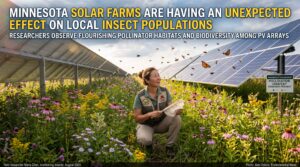
Five years of careful counting under two Minnesota solar arrays flipped the script. Insect numbers tripled. Native bees jumped roughly twentyfold. Flowering plants exploded in variety. The panels did not punch a hole in the living world. They created a refuge.
You and I care about this because pollinators keep crops producing and ecosystems stable. When solar developers plant the right mix of native grasses and wildflowers, the land under those panels starts working harder than anyone expected.
The Study That Changed the Conversation
Researchers from Argonne National Laboratory and the National Renewable Energy Laboratory tracked two utility-scale sites in southern Minnesota: Atwater and Eastwood. Both sat on former agricultural land operated by Enel Green Power. Panels went up a bit higher than usual. Native prairie grasses and wildflowers went in underneath.
From 2018 through 2022 the team walked the same transects twice a month during the growing season. They logged flowering plants, total insects, native bees, and overall group diversity. By year five total insect abundance had tripled. Native bee observations climbed from near zero to more than five per transect on average—an approximate twentyfold surge.
Floral diversity rose dramatically too. Beetles, flies, moths, butterflies, wasps, and hoverflies all showed gains. The most surprising part? These insects did not stay fenced inside the solar site. They moved into neighboring soybean fields and pollinated at rates matching dedicated Conservation Reserve Program grasslands—and higher than the interiors of the bean fields themselves.
Why the Numbers Climbed So Fast
Former farmland often starts depleted. Years of tillage and chemicals leave thin soil and few flowering resources. When developers seed native mixes and stop intensive mowing or spraying, the habitat rebounds. Partial shade from the panels creates cooler microclimates that many insects prefer during hot summers. Pesticide-free zones give populations room to recover.
Lee Walston, the landscape ecologist who led the work, has said the results show habitat-friendly solar can safeguard insects while improving pollination services next door. Four hours of training turned non-experts into capable operators on earlier space projects; here, thoughtful planting turned ordinary solar sites into functioning prairie patches in under five years.
I have walked similar restored sites. The difference hits you immediately. Instead of bare dirt or monoculture turf you hear buzzing, see movement, and notice color. That sensory shift matches the data.
Real Benefits Beyond the Fence Line
Pollinators raised under the panels do not clock out at the property line. Their visits to adjacent soybeans help nearby farmers without extra cost. Higher bee traffic supports better yields and reduces reliance on trucked-in hives. That dual service—clean power plus free pollination—makes the land more productive overall.
Minnesota already runs a Habitat Friendly Solar Program through the Board of Water and Soil Resources. Sites that meet the standard can document benefits for pollinators, songbirds, and other wildlife. Monitoring has turned up dozens of native bee species, multiple bumblebee kinds, amphibians, reptiles, and even nesting birds using the structures. Carbon sequestration and water capture add further co-benefits.
Not every solar farm delivers these results. Gravel or turf under panels produces far less life. The key is intentional seeding with regionally appropriate natives and allowing the vegetation to mature with minimal disturbance.
Practical Steps for Developers and Communities
Raise panels high enough for plants and maintenance equipment. Choose seed mixes proven in local trials—species that establish under partial shade and support long flight seasons for bees. Avoid heavy herbicide use once the habitat is in place. Monitor for a few seasons so adjustments stay data-driven.
If you live near a proposed project, ask about the vegetation plan. Demand the higher standard rather than the bare-minimum option. Farmers next door can request data on pollinator spillover. Policy makers can expand incentives that reward habitat-friendly designs with better permitting or renewable energy credit premiums.
These choices scale. Solar acreage keeps growing. Every site planted right becomes a net gain for insects instead of another loss.
FAQ
Did insect numbers really triple under Minnesota solar panels? Yes. Over five years at the two studied sites, total insect abundance tripled while native bee abundance rose approximately twentyfold.
What plants were used?
Native grasses and wildflowers suited to southern Minnesota prairie conditions. The mix created continuous bloom and structural diversity that insects need.
Do the insects stay only on the solar farm?
No. Researchers documented bees leaving the sites to visit soybean flowers in adjacent fields at rates comparable to dedicated conservation land.
Is this true for every solar farm?
Only those planted and managed as habitat. Bare gravel or frequently mowed turf produces far lower insect numbers.
How does this help farmers?
Increased pollinator visits to nearby crops can support better yields without additional cost or effort from the grower.
What can communities do?
Support Habitat Friendly Solar standards, ask developers for native planting plans, and track results over multiple seasons.
What We Can Do Next
The Minnesota results prove solar farms do not have to erase life from the landscape. When panels sit above native prairie, insect populations rebound and neighboring fields gain free pollination services. That combination strengthens both energy goals and food production.
Ask the next solar developer you meet what grows under their arrays. Push for the higher habitat standard. Share the data with neighbors who still picture sterile fields of glass. The evidence is already walking the rows in southern Minnesota—buzzing, blooming, and working.