You pull into a tight parking garage or a crowded street spot. Mirrors help, but they never show everything. A curb, a shopping cart, or a child just outside your line of sight can still catch you by surprise. That low-speed scrape or near-miss feels avoidable once you experience a proper surround-view system.
A 360-degree camera stitches images from multiple exterior cameras into a bird’s-eye view of your car and the space around it. What started as a luxury parking aid has become one of the most practical daily features on modern vehicles. It reduces stress, prevents expensive bodywork damage, and improves safety in ways that go beyond simply backing into a space.
How the System Actually Works
Most setups use four wide-angle cameras—one at the front, one at the rear, and one under each side mirror. Software blends the feeds into a seamless top-down image displayed on the center screen. Many systems also offer split views that combine the overhead image with a traditional rear or front camera feed.
Guidelines often appear on screen and move with the steering wheel so you can see exactly where the car will travel. Proximity sensors usually work alongside the cameras, adding audible or visual alerts when objects get too close. The view remains useful at low speeds, typically up to about 10 mph, which covers almost every parking and tight-maneuver situation.
I still remember the first time I used one in a narrow downtown alley. The overhead image made the entire path visible at once. Guesswork disappeared.
Parking and Tight-Space Confidence
This is the most obvious benefit, and it remains the strongest. Parallel parking, angled spots, and multi-level garage ramps become far less stressful. You can see the distance to the car beside you, the curb, and any pillar in a single glance.
Studies and real-world reports consistently show reductions in low-speed parking incidents. Drivers spend less time correcting and make fewer contact mistakes. For larger vehicles or drivers who struggle with spatial judgment, the difference is dramatic. Even experienced drivers notice how much faster and cleaner the process becomes.
The system also helps when you need to inch forward or backward in a crowded lot. You no longer rely solely on mirrors or a passenger’s hand signals.
Everyday Safety Beyond the Parking Lot
Blind spots shrink significantly. When pulling out of a driveway or leaving a parallel spot, the side and rear cameras can reveal pedestrians, cyclists, or approaching cars that mirrors might miss. Some systems highlight moving objects or add warning overlays.
Parents especially value the view near the rear wheels and bumper. Small children or pets can appear in those zones without warning. The camera feed gives a clear picture before the car starts rolling. Fleet operators report measurable drops in low-speed collisions and associated repair costs once surround-view cameras are installed across their vehicles.
Off-road or rough-road driving also benefits. Seeing obstacles near the tires or under the vehicle helps avoid rocks, ruts, and deep holes that would otherwise be invisible from the driver’s seat.
Practical Value and Cost Savings
A single curb strike or parking-lot scrape can cost hundreds or thousands in bodywork and paint. Avoiding even a few of those incidents over the life of the car often pays for the camera system many times over. Insurance claims for minor parking damage also decline when drivers have better visibility.
Resale value can improve as well. Buyers increasingly expect surround-view cameras on higher trims, and the feature signals a more complete safety package. For used-car shoppers, a working 360 system is an easy item to check during a test drive.
Aftermarket kits exist for older vehicles, though factory systems usually offer cleaner integration, better calibration, and higher image quality. If you are shopping for a new or recent used car, prioritize models that include the feature as standard or as an affordable package.
Tips for Getting the Most from the System
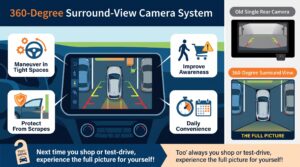
Keep the camera lenses clean. Dirt, snow, or road grime quickly degrades the image. Many cars place the cameras in locations that stay relatively clear, but a quick wipe still helps. Learn the different view modes—some systems let you switch between full overhead, front-focused, or rear-focused displays.
Use the dynamic guidelines. They update with steering input and give a reliable prediction of the car’s path. Combine the camera view with the audible proximity alerts rather than relying on one alone. At night or in low light, check whether your system includes good night-vision performance; quality varies between brands.
FAQ
Do I still need to check mirrors with a 360 camera?
Yes. The camera is a powerful aid, not a complete replacement for mirrors and direct observation.
How accurate is the bird’s-eye view?
Modern systems are highly accurate at low speeds. Calibration after windshield or body repairs is important to keep the image aligned.
Can the cameras work in rain or snow?
They still function, though heavy precipitation or buildup on the lenses reduces clarity. Some vehicles heat or clean the lenses automatically.
Is a 360 system only useful for parking?
No. It helps with driveway exits, tight urban streets, off-road obstacles, and general blind-spot awareness.
Are aftermarket 360 kits worth it?
They can be useful on older cars, but factory systems usually deliver better image quality, reliability, and integration with other safety features.
Do all new cars offer this feature?
Most major brands now offer it on at least mid-to-upper trims. Availability continues to expand into more affordable models.