Roku built its reputation on a simple promise: streaming TV shouldn’t require expensive hardware.
For years, that formula worked beautifully. You could plug a small Roku stick into an older television, connect to Wi-Fi and turn a basic screen into a convenient streaming hub without spending much money.
Now the value equation is changing.
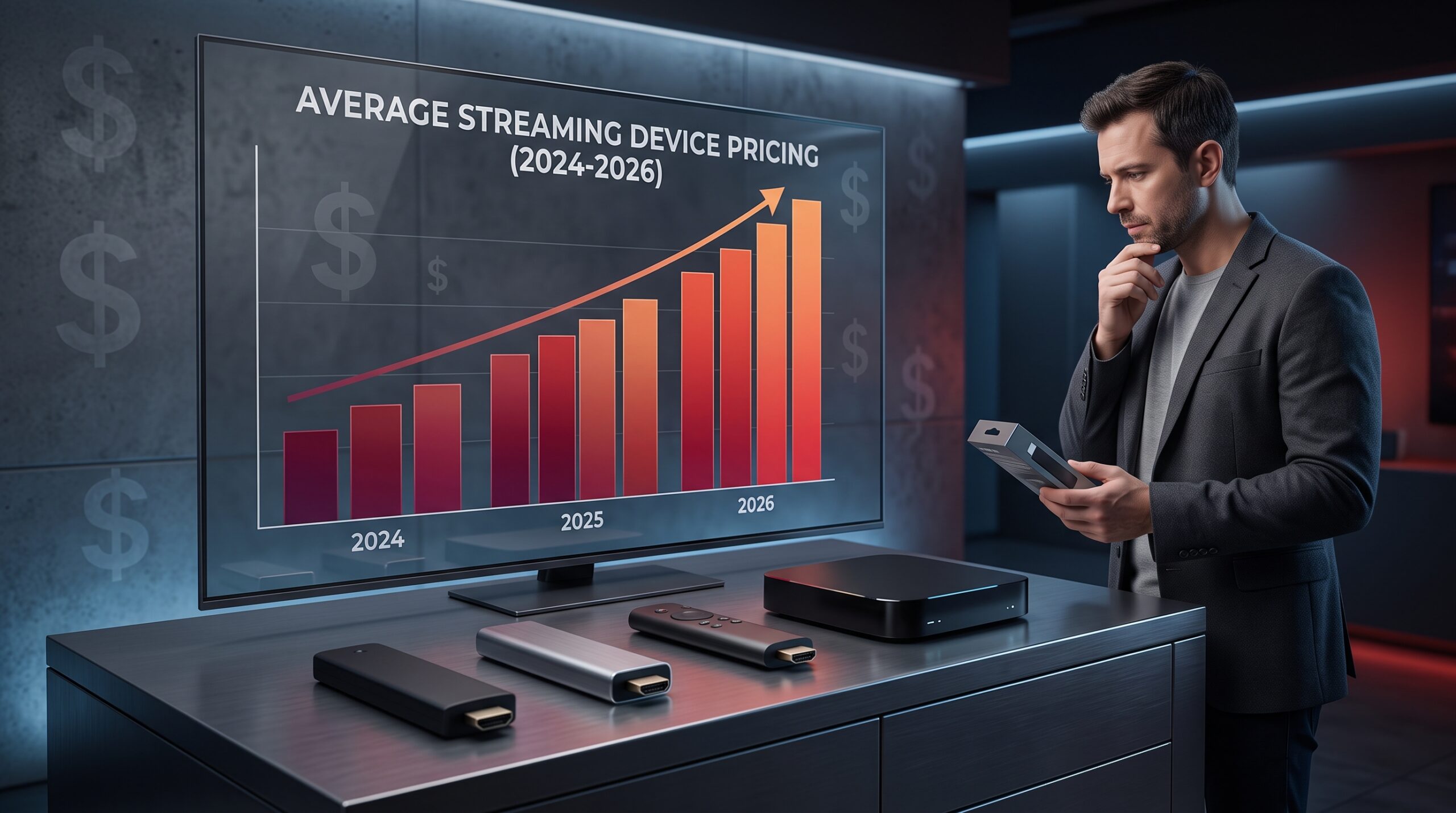
Roku has raised the listed prices of its streaming hardware by as much as $50. The basic Streaming Stick has moved from $29.99 to $39.99, the Streaming Stick Plus from $39.99 to $59.99, the Streaming Stick 4K from $49.99 to $79.99, while the Roku Ultra has jumped from $99.99 to $149.99.
That’s a substantial increase for a category where affordability has always been one of the biggest selling points.
So, should you still buy a Roku?
The answer depends heavily on which model you want, what TV you own and how much you value Roku’s simple interface.
Why Did Roku Raise Its Prices?
The biggest reason appears to be the rapidly rising cost of memory and other components.
Roku has attributed the increases to shortages affecting memory and components as demand from the artificial-intelligence industry puts pressure on the broader hardware supply chain. Other consumer-electronics manufacturers have also been dealing with higher component costs.
This is an unusual situation for Roku.
The company has historically competed by keeping hardware inexpensive. Its CEO Anthony Wood previously argued that Roku’s relatively lightweight operating system gave the company a cost advantage because it required less memory and storage than competing platforms.
Yet the economics have shifted.
Even if Roku’s hardware uses comparatively modest amounts of memory, it still depends on the same broader component ecosystem. When manufacturers prioritize higher-margin AI infrastructure and memory demand rises, cheaper consumer electronics can feel the effects.
How Much More Are Roku Devices?
Here’s the new U.S. pricing picture:
| Roku device | Previous price | New listed MSRP | Increase |
|---|---|---|---|
| Roku Streaming Stick | $29.99 | $39.99 | $10 |
| Roku Streaming Stick Plus | $39.99 | $59.99 | $20 |
| Roku Streaming Stick 4K | $49.99 | $79.99 | $30 |
| Roku Ultra | $99.99 | $149.99 | $50 |
| Roku Streambar SE | $99.99 | $149.99 | $50 |
These increases range from roughly 33% to 60%, depending on the model.
There is one important wrinkle, though.
Roku’s website has continued showing several devices at their old prices as temporary sale prices. Its current U.S. product listings show the Streaming Stick at $29.99 against a $39.99 reference price, the Streaming Stick Plus at $39.99 against $59.99, the Streaming Stick 4K at $49.99 against $79.99 and the Ultra at $99.99 against $149.99.
That makes the timing of a purchase unusually important.
Are Roku Devices Still Good For The Money?
Yes—but not every model makes sense at the new MSRP.
Roku remains attractive because its platform is straightforward. The company emphasizes an easy-to-use interface, broad app availability and access to hundreds of free channels through The Roku Channel.
For someone upgrading an older television, that simplicity can be worth a lot.
You don’t necessarily need the fastest processor, enormous storage or an elaborate interface. If your primary activities are Netflix, YouTube, Disney+, Prime Video and other mainstream streaming services, a compact Roku can still do the job without turning your television into a complicated computer.
The problem begins when the price approaches stronger competitors.
At $30 or $40, Roku is easy to recommend.
At $80 or $150, the conversation changes.
The Entry-Level Roku Still Makes Sense
The basic Roku Streaming Stick remains the easiest model to justify if you’re buying for a secondary TV.
A bedroom television. An older guest-room TV. A kitchen screen.
For those situations, paying substantially more for premium hardware may not provide a noticeable benefit.
Roku’s official specifications position the basic Streaming Stick as an HD device with a voice remote and a compact design that plugs directly into the television.
If you have an older 1080p television, spending extra on 4K hardware may be unnecessary.
That is where Roku’s traditional value proposition remains strong.
The Roku Streaming Stick Plus Is The Sweet Spot
For many buyers, the Streaming Stick Plus may be the most interesting model.
It supports 4K and HDR, while remaining smaller and less expensive than the Ultra. Roku describes it as a straightforward way to upgrade a 4K television to its streaming platform.
This is the model to consider if you want something better than basic HD streaming without jumping into premium-player territory.
The catch is the new MSRP.
At $59.99, it is no longer an obvious bargain. It becomes a product you should compare against competing streaming hardware before buying.
That’s an important change.
Previously, the price difference between Roku’s affordable 4K hardware and more expensive streaming boxes made Roku an easy budget recommendation. Now that gap has narrowed.
When The Streaming Stick 4K Makes Sense
The Streaming Stick 4K has an even harder value proposition at its new $79.99 MSRP.
It supports 4K, HDR10+, Dolby Vision and long-range Wi-Fi, according to Roku’s product information.
Those features are useful.
But whether they’re worth $80 depends on your television and viewing habits.
If you own a premium 4K TV with Dolby Vision and frequently watch high-quality HDR content, the additional capabilities can make sense. If you’re watching mostly HD content on an inexpensive television, you may never notice the difference.
This is where consumers should avoid paying for specifications they won’t use.
A feature only has value when your equipment and viewing habits can actually take advantage of it.
Is The Roku Ultra Still Worth $150?
This is the toughest question.
The Roku Ultra previously occupied a comfortable position as a premium-but-affordable streaming box. At roughly $100, it was substantially cheaper than some high-end alternatives while offering features such as 4K, Dolby Vision, a more advanced remote and additional connectivity. Roku currently lists it as a 4K player with a rechargeable Voice Remote Pro, lost-remote finder and other premium features.
At $149.99, however, the calculation becomes different.
You’re no longer comparing Roku with cheap streaming sticks.
You’re comparing it with premium streaming boxes.
And that means buyers should ask a simple question: What do I actually need?
If you only want Netflix and YouTube, the Ultra is excessive.
If you have a premium home-theater setup and specifically want Roku’s interface, wired networking and advanced remote features, it becomes more defensible.
Don’t Confuse A Bigger Price With A Better Experience
This is an easy trap with technology.
A $150 device isn’t automatically going to make Netflix look three times better than a $50 device.
Picture quality is heavily influenced by your television, the content source, internet connection and the streaming service itself. A premium player can improve responsiveness, connectivity and convenience, but it doesn’t magically transform ordinary HD video into cinema-quality footage.
That’s why the Ultra should be purchased for its specific advantages—not simply because it’s Roku’s flagship.
Should You Buy Roku Now Or Wait?
This may be the most interesting part of the current situation.
Roku’s listed MSRPs have increased, but retailers still have inventory purchased under the previous cost structure. That means you may be able to find older pricing while that inventory lasts. Reporting from Ars Technica indicates that third-party retailers may continue selling devices at lower prices until their existing inventory runs out.
So if you’ve already decided to buy a Roku, shopping around matters more than usual.
Don’t look only at the manufacturer’s MSRP.
Check multiple retailers.
A $20 difference on a $40 streaming stick is enormous in percentage terms. The same principle applies to the Ultra, where finding the previous $100 pricing can save $50 compared with the new MSRP.
Watch For Temporary Sales
Roku itself is currently displaying several devices at prices that match their former MSRPs, although those offers are presented as limited-time promotions.
That creates an interesting buying window.
If you need a streaming device today and find the older price, there is little reason to wait purely because you hope the MSRP will fall again. The current pricing environment suggests that component costs are putting pressure on manufacturers.
But if you don’t need a new device immediately, waiting for major shopping events or retailer clearance can make sense.
The best deal may come from inventory rather than a permanent price reduction.
Roku Versus The Alternatives
Roku is no longer competing only against other inexpensive streaming sticks.
Consumers can choose from Google TV hardware, Amazon Fire TV devices, Apple TV and the operating systems built directly into modern televisions.
That makes the new Roku pricing more consequential.
For example, the Google TV Streamer has been positioned around the $100 range, while Apple TV 4K occupies a much higher price tier. Recent reporting also notes that Apple has raised Apple TV pricing amid the same broader component-cost pressures affecting consumer electronics.
The comparison isn’t simply about price, though.
Roku’s Biggest Advantage Is Simplicity
Roku’s biggest selling point remains its straightforward user experience.
You don’t need to spend hours configuring the device. The interface is familiar, the remote is simple and the platform supports a large selection of streaming services.
For families and less technical users, that matters.
A device that everyone can operate without asking for help has genuine value.
Roku also has a strong position for people who want to upgrade an older television without replacing the entire set.
Google And Amazon Can Be Better For Some Users
If you already live heavily inside Google’s ecosystem, Google TV may make more sense.
Amazon users may prefer Fire TV because of Alexa integration and its broader connection to Amazon services.
Neither is universally better.
The smart purchase depends on what ecosystem you already use and which features you actually care about.
That’s why the Roku price increase isn’t necessarily a reason to abandon the platform. It simply means Roku has to compete more aggressively on overall value.
What About Roku’s Increasing Advertising?
There is another issue buyers should consider before spending more money on Roku hardware: the platform’s advertising model.
Roku has increasingly built its business around advertising and free, ad-supported streaming. Its own platform promotes free entertainment and live channels as part of the Roku experience.
For many people, that’s a benefit.
Free channels can reduce the need for another paid streaming subscription.
But some viewers dislike seeing more promotional content integrated into their television interface.
This creates an interesting value question.
If you’re paying more for the hardware while also seeing an increasingly commercialized platform, you may reasonably expect the device itself to deliver more value in return.
That doesn’t make Roku’s advertising model automatically bad.
It simply means consumers should understand what they’re buying.
Who Should Still Buy A Roku?
Roku remains a strong choice for several types of buyers.
Buy a Roku if you want:
- A simple streaming interface
- Easy access to major streaming services
- A device for an older or secondary TV
- A compact streaming stick
- Access to free ad-supported content
- A familiar, easy-to-use remote
- A good deal below the new MSRP
The last point is particularly important.
At the current sale prices, Roku remains much easier to recommend than at the full new MSRPs.
Who Should Consider Something Else?
You may want to compare alternatives if you’re being asked to pay $80 for a Roku Streaming Stick 4K or $150 for the Ultra.
At those prices, you have more choices.
A buyer who wants advanced gaming features, a powerful media interface, extensive smart-home integration or premium hardware should compare Roku with competing platforms before purchasing.
Likewise, if you already own a relatively modern smart TV with a responsive operating system, buying an external streamer may not provide enough benefit to justify the expense.
Sometimes the best streaming device is the one you already own.
The Bigger Story Behind Roku’s Price Increase
Roku’s price hike is part of a broader hardware story.
The explosion in AI infrastructure has increased demand for memory and other computing components. That pressure is now reaching products that have little to do with artificial intelligence themselves.
A streaming stick doesn’t need to train an AI model.
But it still needs memory chips.
And when the global component market changes, even relatively inexpensive consumer devices can become more expensive to manufacture.
Roku’s situation is therefore a useful reminder that the AI boom isn’t confined to data centers.
It can influence the prices of ordinary electronics sitting underneath your television.
Final Verdict: Are Roku Streaming Devices Still Worth It?
Yes—but only at the right price.
Roku’s platform remains easy to use, widely supported and genuinely convenient. Its low-cost streaming sticks can still be excellent upgrades for older televisions, especially when retailers sell them near their previous prices. Roku’s current official listings show several models temporarily discounted to those older price levels.
The problem is the new MSRP.
A Roku Streaming Stick at $39.99 is still reasonable. A Streaming Stick Plus at $59.99 requires more consideration. The $79.99 Streaming Stick 4K and $149.99 Ultra face much tougher competition because buyers can enter higher-end streaming categories at those prices.
So don’t buy based on the Roku name alone.
Compare.
Check current retailer pricing. Think about your television’s resolution and HDR capabilities. Decide whether you need premium features or simply want an uncomplicated way to watch Netflix and other streaming services.
If you can find a Roku at its old price, the value proposition becomes much stronger.
At the new full MSRP, however, Roku has lost one of its biggest advantages: being the obvious affordable choice.
FAQ
Why did Roku raise the prices of its streaming devices?
Roku has attributed the increases to higher costs for memory and other components, with the broader AI hardware boom contributing to supply and pricing pressure.
How much did Roku prices increase?
Depending on the model, listed U.S. MSRPs increased by $10 to $50. The Roku Ultra rose from $99.99 to $149.99, while the Streaming Stick 4K increased from $49.99 to $79.99.
Is Roku still worth buying in 2026?
Yes, particularly when you can find one at or near its previous price. The basic Streaming Stick remains a sensible option for HD televisions, while the Streaming Stick Plus can be attractive for affordable 4K streaming.
Is the Roku Ultra worth $150?
It depends on your needs. The Ultra offers premium features such as 4K, Dolby Vision, Ethernet connectivity and a rechargeable Voice Remote Pro, but its $149.99 MSRP makes competing streaming boxes more relevant to the buying decision.
Should I buy a Roku now or wait?
If you find a device at the previous price, buying now can make sense. Roku and retailers are still offering some models below their new MSRPs, but those discounts may not last as existing inventory is sold.
Is Roku better than Google TV or Fire TV?
There is no universal winner. Roku is particularly appealing for its simple interface, while Google TV and Fire TV can make more sense if you are deeply invested in Google’s or Amazon’s ecosystems.
Will Roku prices go back down?
There is no confirmed indication that the new MSRPs will permanently return to their old levels. Current discounts are presented as sales rather than permanent MSRP reductions.